The $LIBRA Case: Journalism Caught Between Judicial Paralysis and Government Retaliation
While the criminal case moves at a glacial pace, journalists have uncovered calls, documents, and payments that undercut Milei's official story about the $Libra crypto scandal. Now the government is firing back by revoking press credentials and going after the reporters doing the digging.

While the Argentine case remains at a standstill, journalists from multiple outlets have uncovered key details that undermine Milei’s defense. Now the government is punishing the press for doing its job.
By Santiago Galindo @santiegali
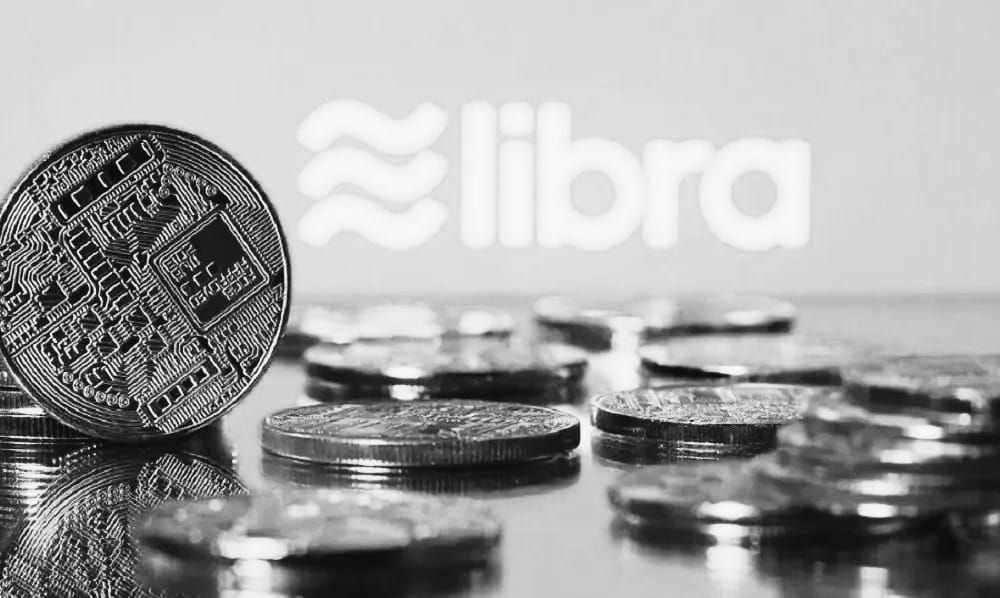
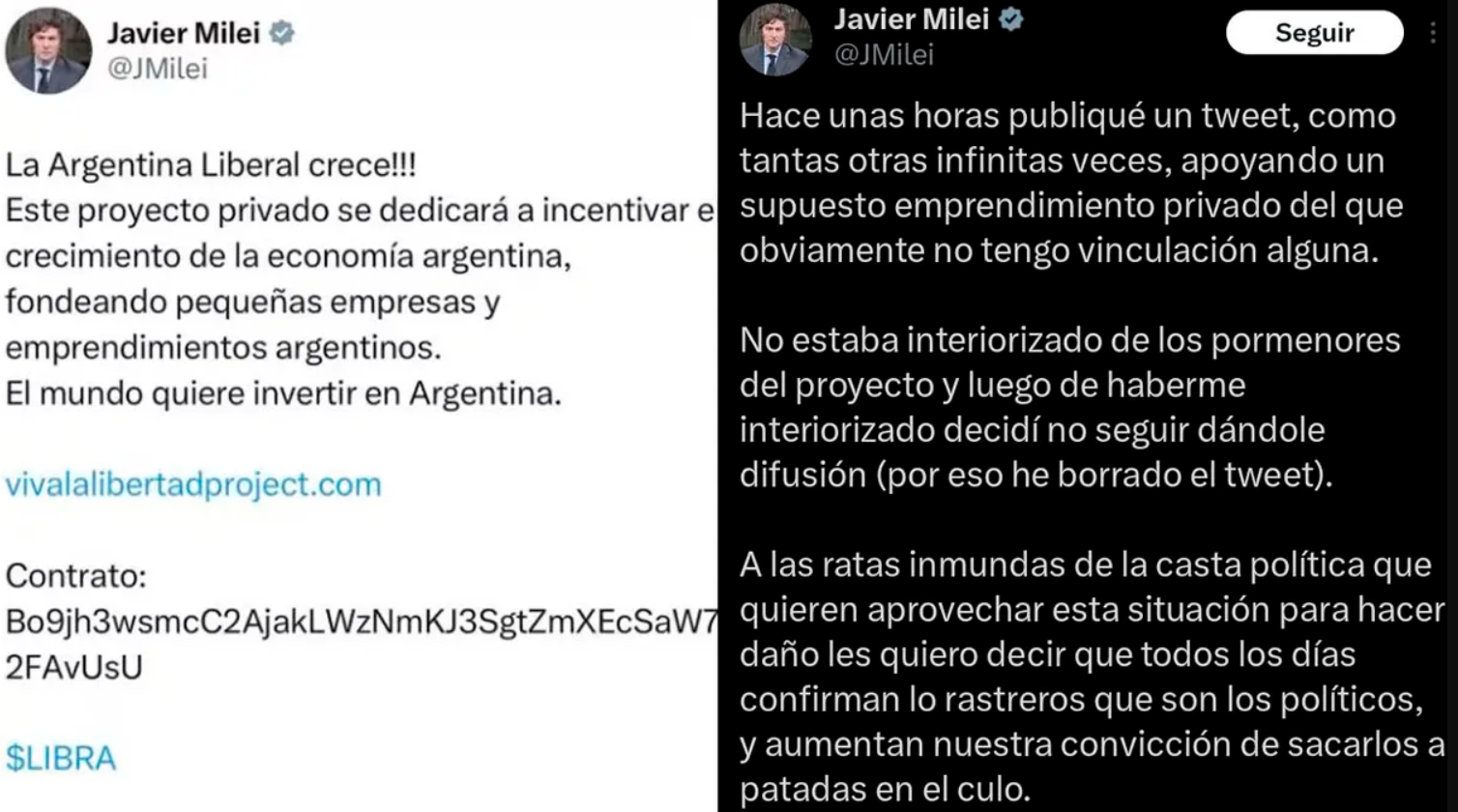
“This private project will be dedicated to stimulating the growth of the Argentine economy.” Under that premise, Argentine President Milei promoted the launch of the private project “Viva la Libertad” on his X profile on February 14, 2025, along with the token code to purchase the digital currency $Libra.
Minutes after the announcement, the value of the token surged 1,300%, reaching a market capitalization of US$4 billion.
A few hours later — while many users wondered if his account had been hacked — a small cluster of digital wallets withdrew US$90 million, more than 80% of the circulating supply. The coin collapsed, dropping from US$54 to US$0.50, causing total losses of US$251 million across 114,410 digital wallets around the world — the equivalent of 44,000 investors — according to data provided by the National Congress Investigative Commission and evidence submitted in ongoing judicial proceedings.
A large portion of those funds ended up in wallets belonging to Kelsier Ventures, a venture capital firm run by Hayden Mark Davis, the American who created the token. Those long, turbulent hours ended with the original tweet deleted and a new one posted in which Milei defended himself by saying he had not been “familiar with the details of the project.”
Over the first months of 2026, a series of investigative journalism pieces revealed crucial details for understanding the scheme and the chain of responsibility behind the project — including the draft of an alleged confidential agreement between Milei and Davis for the promotion of the token. They also made public that the federal prosecutor in charge, Eduardo Taiano, had failed to load the documents into the case file on time, or to notify the plaintiffs of the existence of that evidence.
After this became known, the legal undersecretariat of the General Secretariat of the Presidency sent a response to the prosecutor’s office denying the existence of any agreement. That document was incorporated into the case file. Currently, the investigation into the money trail has stalled due to a lack of technological and financial resources within the specialized unit of the Public Prosecutor’s Office.
The role played by journalists from a wide range of outlets — traditional and independent, across the political spectrum — has been and continues to be an essential contribution to helping a significant portion of Argentine society understand a case in which the president himself is a constitutive and necessary part of a (potential) multi-million-dollar fraud.
“Either he’s not very smart, or he’s some kind of corrupt. You choose.”
Those were the two options offered by former Argentine Foreign Minister Diana Mondino when journalist Mehdi Hasan asked why she thought Milei had posted the tweet.
Setting aside any personal opinions about the first option, the second hypothesis deserves closer attention: “he’s some kind of corrupt.”
The evidence belatedly added to the case file was obtained from a report produced by the General Directorate for Criminal Investigation and Technological Support (DATIP), following forensic examination of the seized phone belonging to Mauricio Novelli — a trader and businessman, organizer of the TechForum, and a close associate of the president and his sister Karina, the Secretary General of the Presidency.
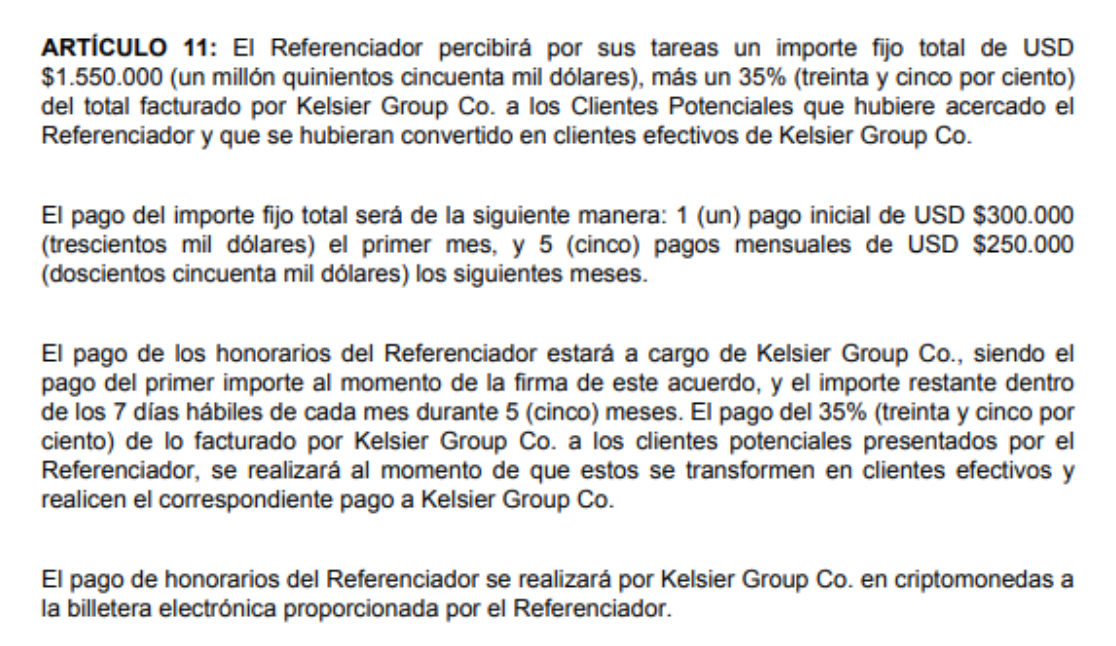
The forensic experts submitted two reports to Prosecutor Taiano. The first, on November 17, 2025, contained the file “LOI_KELSIER.docx” — the draft agreement — including a proposal from Kelsier Group to Novelli’s firm, and his partners Manuel Terrones Godoy and Sergio Morales (the intermediaries between Davis and Milei), offering US$1,550,000 plus 35% of total billings.
The second forensic report, submitted to Taiano on January 9, 2026, included phone conversations between those involved before, during, and after the $Libra launch — as well as records indicating a close relationship between Novelli and the Milei siblings dating back to at least 2020.
The prosecutor did not formally incorporate this evidence into the judicial case file until February 24 of this year. A week later, journalist Hugo Alconada Mon published a piece in La Nación revealing that the draft agreement between the president and Davis had been found.
However, lawyer and journalist Natalia Volosín reported in her newsletter La Justa that the file had been in Taiano’s possession since November 17 of the previous year, but he had not given the plaintiffs access to it — because he had never formally incorporated it into the case. This was confirmed by Nicolás Oszut, attorney for a group of victims, to La Justa.
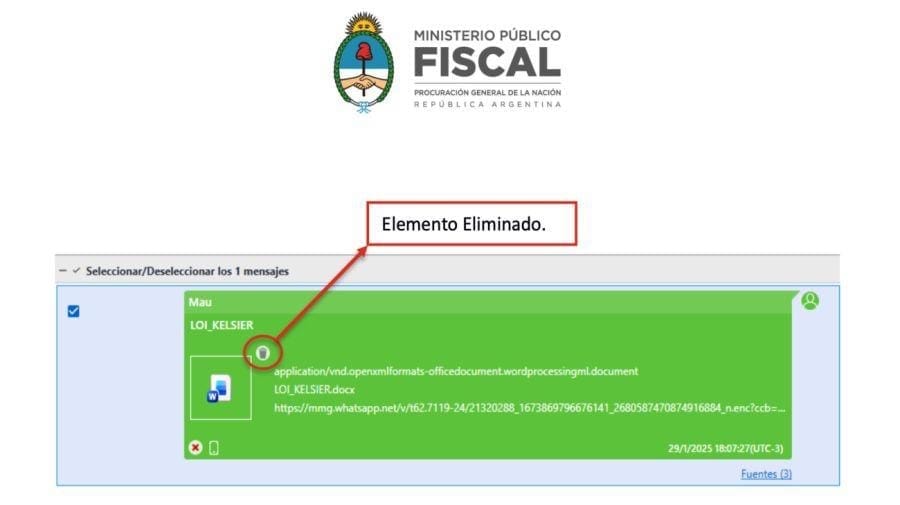
The DATIP forensic team, while reviewing the phones and other devices belonging to Novelli, Terrones Godoy, and Morales, encountered a large number of permanently deleted records and conversations — meaning not all content could be recovered.
But they did manage to restore sensitive files, including a document created on February 11, 2025 — three days before the tweet — detailing the amounts and payment schedule agreed upon to carry out the February 14 fraud. El Destape published the full document in English, which clearly shows the involvement of the ruling inner circle in the development of the project. This is the translation:
"Hi guys,
This is the final agreement discussed with H.
$1.5M in liquid tokens or cash as an advance
$1.5M in liquid tokens or cash = Milei announces on Twitter that his advisor is Hayden Davis/Kelsier/the Davis family
$2M in tokens or cash = contract signed in person with Milei for blockchain/AI advisory services for the Argentine government and/or Javier Milei, and a review session with Javier and Karina."
Investigators also found 2024 WhatsApp voice messages in which Novelli instructs an administrative employee at his firm, N&W, to set aside “the 4,000 that need to go to Karina.” He sent this message on the same day he visited the Casa Rosada. Who authorized his entry that April afternoon? The Secretary General of the Presidency.
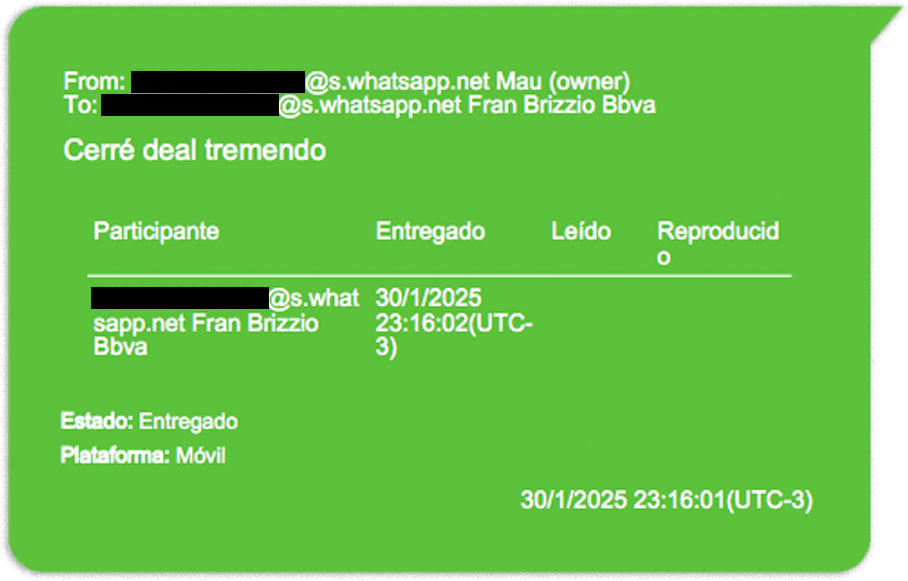
“I closed a massive deal,” Novelli wrote in a chat to an acquaintance after the January 30, 2025 meeting at the Casa Rosada — two weeks before the memecoin launch — attended by him, Terrones Godoy, Davis, and, of course, the current occupant of the presidential chair. That same day, at the exact time of the meeting with Milei, the American CEO transferred US$499,999 to a digital wallet. An hour after the meeting, a second transfer of a similar amount was recorded, according to financial records incorporated into the case file.
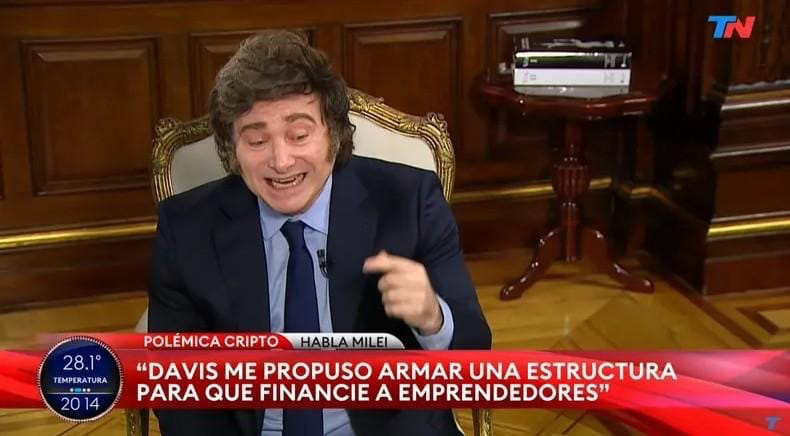
On February 17 of that year — three days after the launch and collapse of the crypto — the president gave his first interview to journalist Jonatan Viale on TN, now remembered for his advisor Santiago Caputo’s on-camera interruption to redirect the interviewer’s question. In the interview, Milei denied having signed any agreement with Davis, saying he had simply promoted a private venture the way he promotes “hundreds of things.”
The discoveries made on the devices of those involved — contracts, invoices, call logs, messages — allow investigators to reconstruct the structure of the fraud and make clear that the Argentine president was not only fully aware of the project, but received successive payments for his participation in it.
The draft contract makes the roles of each party explicit. Hayden Davis, through his firm Kelsier Group, appears as the creator of the project.
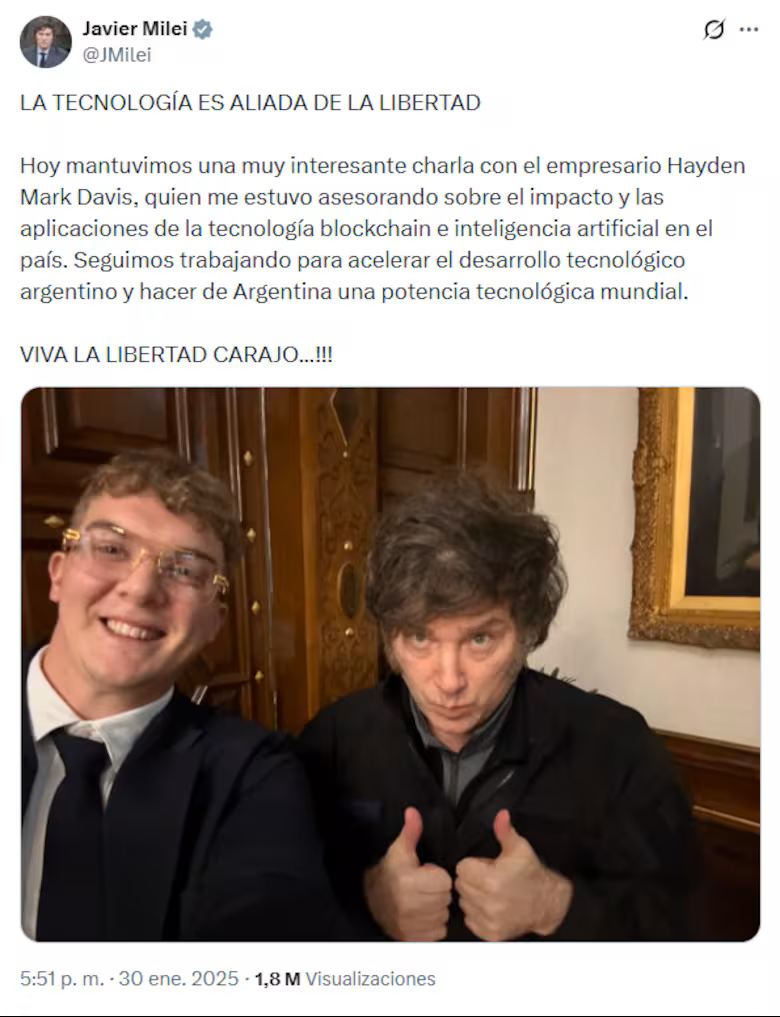
Julian Peh, a Singaporean tech entrepreneur and founder of Kip Protocol, handled the technological development and provided the blockchain infrastructure. However, Interpol Singapore has stated it has no records of any person by that name — meaning whoever traveled to Argentina in October 2024 to meet with Milei, Adorni, and Novelli did so under a false identity.
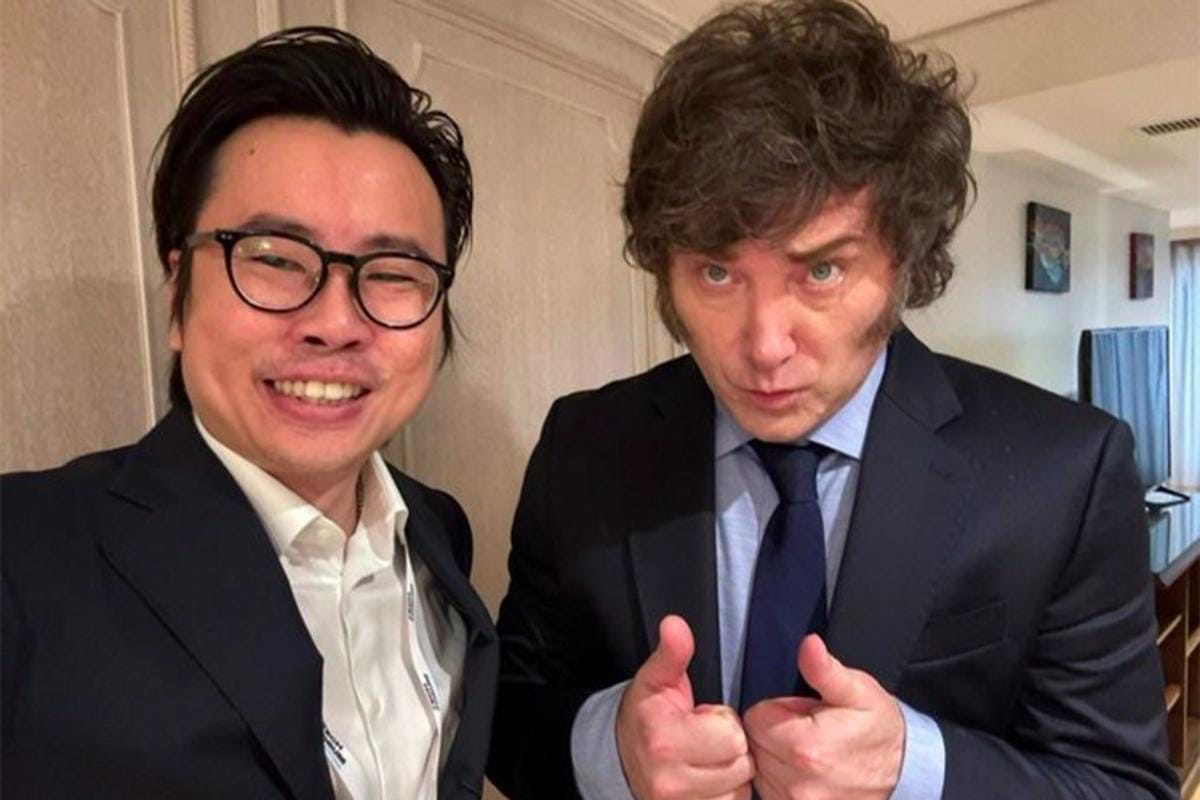
Novelli served as the intermediary between the crypto businessmen, the investors, and the Milei government. Sergio Morales appeared as the Argentine technical advisor.
According to the records, on the day of the crypto launch, the Argentine Head of State spoke by phone with Novelli at least seven times.
“When the project became public, I gave it coverage,” Milei said in several interviews. But the phone records recovered by DATIP allow investigators to reconstruct the sequence precisely. The first call between them that day occurred at 18:02 — 36 minutes before the token was created. The token was created at 18:38. They spoke again at 18:54, and at 19:03 — two minutes after the tweet — there was another call.
After that, the trader began exchanging calls with Karina and Santiago Caputo between February 14 and 16.
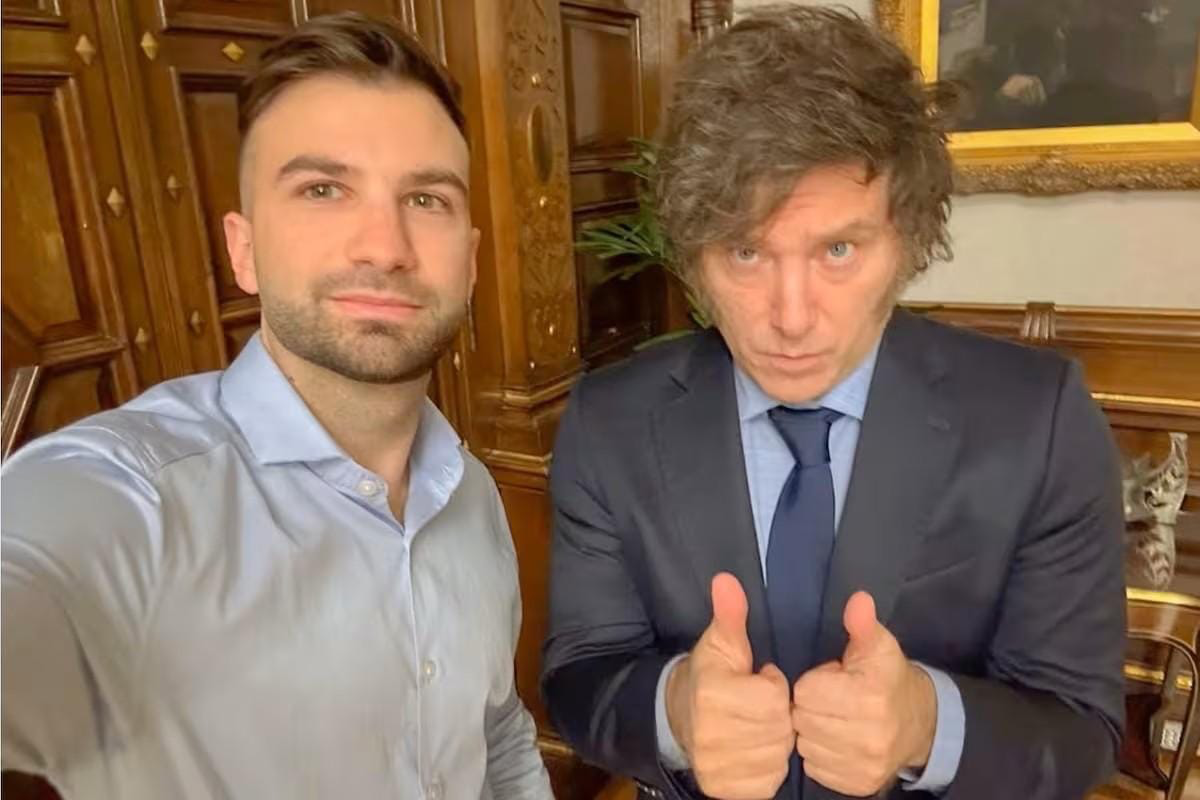
This was the operational framework built to execute the multi-million-dollar fraud. Scams of this kind are common in financial markets. What makes this case exceptional is the institutional credibility that Milei provided to pull it off. It could not have reached the scale and reach it did without the legitimacy and visibility afforded by a sitting president’s endorsement.
The scheme’s reach crossed national borders and caused losses on a global scale. Alongside the case being prosecuted in Argentina’s federal courts at Comodoro Py, a separate proceeding is open in the United States. The class action lawsuit primarily targets Davis and Ben Chow, CEO of Meteora, who are accused of criminal conspiracy for launching and manipulating cryptocurrencies without real backing.
While the judge temporarily lifted the freeze on Davis’s digital wallets, the criminal and civil case remains active. Recently, U.S. attorneys reached out to Argentine legislators on the Investigative Commission to request evidence and explore a potential criminal complaint against Javier Milei. Those who filed the lawsuit argue that the president’s promotion constituted a “highly deceptive and strategically planned statement.”
The immediate precedent involves another presidential family: Donald Trump’s. The same Davis managed the $MELANIA memecoin — which also collapsed 99% from its launch price.
From Pump and Dump to Rug Pull
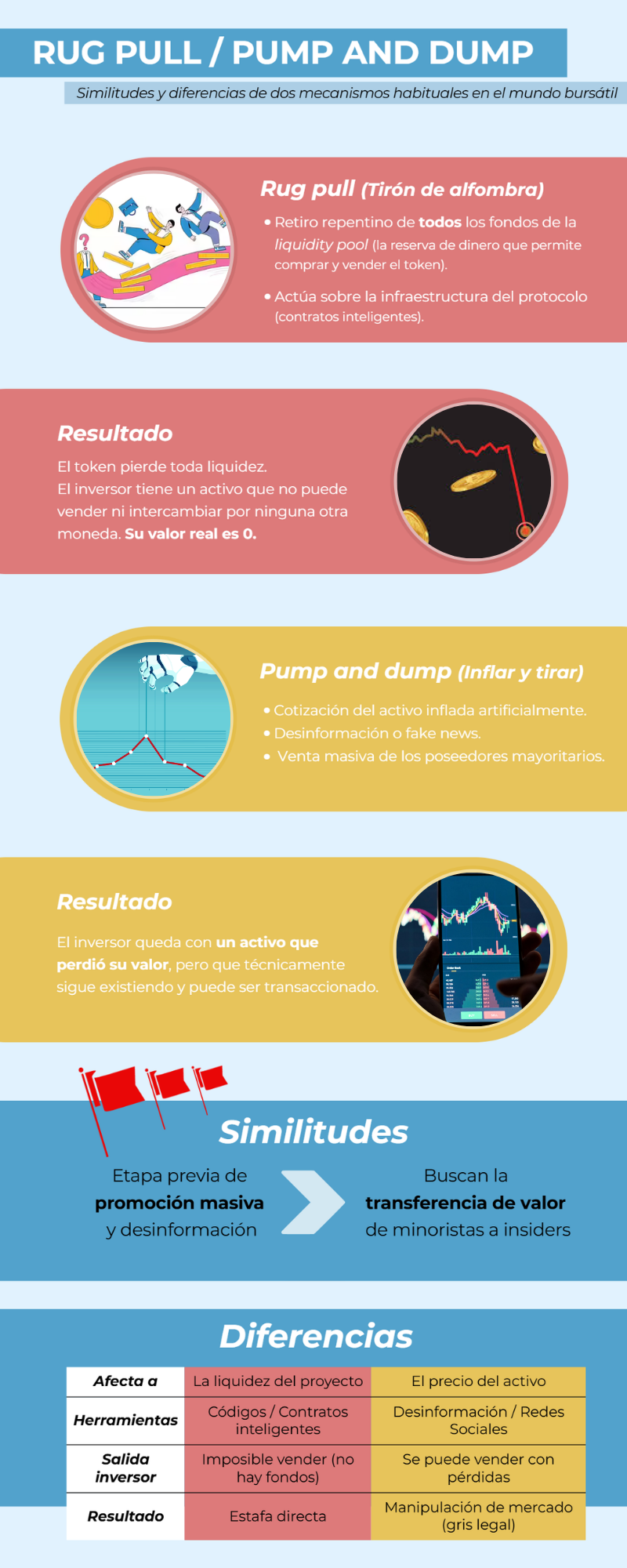
Pump and dump is one of the most common forms of financial fraud. It involves artificially inflating the price of an asset by manipulating or spreading false information to attract new investors — which increases demand and therefore the price (the “pump”). Once the asset is overvalued, those behind the deceptive promotion sell their holdings, the price crashes, and trusting investors suffer significant losses.
Rug pull is another common form of crypto fraud. Developers create the token, promote it aggressively, and provide liquidity. Once enough investors are in, they withdraw their tokens and abandon the project with all the funds, draining liquidity from the pool.
The $Libra case combines both mechanisms. Milei generated the credibility needed to attract thousands of investors, which inflated the value of the crypto asset before it collapsed with the mass sell-off by its largest holders (pump and dump). What makes this case unique is that the small group of project founders held the highest percentage of tokens — and it was they who coordinated the withdrawal of liquidity to lock in their profits (rug pull).
It falls to the justice system to clarify the matter by answering the following questions: Did Milei receive payment for promoting the cryptocurrency? Was he aware of the details of the project, or was he truly “unfamiliar with the details,” as he claimed? How did he obtain the token code he shared on X before it was publicly available? Why did it take him five hours to delete the post after the price had already crashed?
The Judicial Establishment
Despite all the evidence submitted by the forensic experts, the case remains in the preliminary investigation stage. There are no formal defendants, and no one has been called in for questioning. The individuals under investigation who appear in the case file include: Javier and Karina Milei, Mauricio Novelli, his sister María Pía and his mother María Alicia, Manuel Terrones Godoy, Sergio Morales, Julián Peh, and Hayden Davis, among others.
The case was initiated in February 2025 following a criminal complaint filed by Argentine economist Claudio Lozano, later joined by additional plaintiffs from affected groups. The presiding federal judge is Marcelo Martínez de Giorgi, who delegated the investigation to Taiano.
In November 2025, Martínez de Giorgi ordered the seizure of assets belonging to Novelli, his sister, his mother, his business partner, Morales, Davis, and Rodríguez Blanco. In January 2026, the Federal Court of Appeals upheld the seizures and raised the amounts.
After journalist Volosín revealed that Taiano had waited two months to notify the judge and the parties about the existence of communications between the main suspects — and four months to formally incorporate the draft agreement into the case file — the National Congress Investigative Commission filed a complaint against Taiano before the Disciplinary Tribunal of the Public Prosecutor’s Office, alleging “obstruction of the investigation and possible concealment of the reported events.” They also requested his removal from the case.
Eduardo Taiano was appointed federal prosecutor in 1993. His résumé includes cases involving illicit enrichment charges against former president Néstor Kirchner, the expropriation of Papel Prensa, and the investigation into the death of Alberto Nisman. Notably, none of those cases advanced in a timely manner. In the hallways of the Comodoro Py courthouse, insiders say he tends to calibrate his pace to the prevailing political winds.
For his part, Justice Minister Juan Bautista Mahiques, in an interview with A24 following the disclosure of the latest evidence, said: “Talking so casually about whether someone is guilty of a crime when they haven’t even been formally indicted — and especially when we’re talking about the President — strikes me as reckless.”
The investigative commission, made up of legislators from various blocs, submitted a formal request to summon the Chief of Staff and the Secretary General of the Presidency before Congress. They also requested that the president provide an explanation of his communications with Novelli. Both requests were blocked by the ruling coalition in the Chamber of Deputies.
Those who came to power on an anti-establishment platform — presenting their agenda as a moral crusade between good (themselves) and evil (everyone else in Argentine society) — now take shelter behind judicial complicity, one of the most discredited and entrenched institutions in the country.
The $Libra fraud is the tip of the corruption iceberg surrounding this administration: Adorni and his unexplained wealth accumulation, the diversion of funds from the National Disability Agency (ANDIS) and the 3% kickback to Karina, the ties between José Luis Espert and narco-linked businessmen — which forced him to withdraw his candidacy.
The pace of justice is arbitrary and chronically out of step with investigative journalism. While corruption cases against governments drag on for years, the press — when it does its job — works against the clock. The value of that work is incalculable. The state’s response, on the other hand, is calculated to the last detail.
We don’t hate journalists enough.”
That’s the phrase the president repeats over and over — journalists being one of the main enemies in his moral crusade against evil.
“Scum,” “on the payroll,” “enemies of the Fatherland” — a long stream of insults and dismissive labels flows from the inner circle of power, feeding the hatred of his liberal army on social media.
But this battle isn’t only rhetorical. It has very concrete expressions that threaten freedom of the press.
Much like U.S. President Donald Trump, the Argentine government revoked the press credentials of several accredited journalists who cover the Casa Rosada. In the days prior, the embattled Chief of Staff told one of them that he was “just a journalist” — when that journalist asked about the criminal case in which the Chief of Staff himself is being investigated for illicit enrichment.
Milei, for his part, gave an interview on public television in which he claimed that “95% of Argentine journalists are criminals.” During Holy Week, according to a report by Martín Rodríguez Yebra in La Nación, the president posted 86 tweets against the press and reposted another 874 in just four days.
It’s not only the Executive Branch seeking to suppress any criticism. After Natalia Volosín’s report on the concealment of evidence, Prosecutor Taiano summoned her to testify and reveal how she obtained the files and information on the reports’ dates.
He ultimately had to withdraw the summons after it provoked overwhelming pushback from the journalism community. The National Academy of Journalism of Argentina stated in a press release that “the Judiciary must be the guarantor of press freedom, not an instrument of retaliation.”
Beyond Argentine journalism, the international press has also picked up the findings in the crypto fraud case — covered by outlets including the Financial Times, The New York Times, El País, Reuters, and The Economist — all noting that the case will damage the president’s credibility in the medium and long term.
Freedom of expression is a right enshrined in the Argentine National Constitution and in international treaties. Article 43 of the Constitution goes further, establishing that the confidentiality of journalistic sources cannot be infringed.
The $Libra case is yet another demonstration of how critical and rigorous journalism serves as a check on power. The investigations carried out by various reporters are essential work to ensure that those who happen to be running the country do not go unpunished thanks to judicial arbitrariness.
Or, at the very least, they provide a foothold for mobilizing ever more sectors of society against a model that is driving Argentina straight off a cliff.