
El Salvador, South Sudan, Eswatini: the destinations the United States chose for its deportees
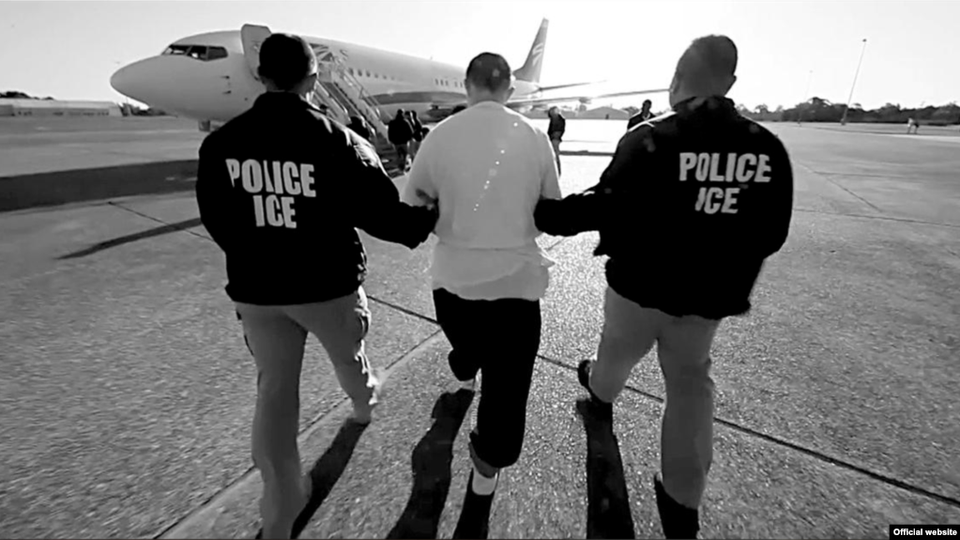
While the war with Iran dominates the headlines, armed groups claiming the Black Panther legacy have returned to American streets to confront ICE raids. A look at what got buried.
By Equipo Mutamag | Politics | Estimated reading time: 8 minutes
Published: March 21, 2026
Since March 16, 2026, a federal appeals court has authorised the Trump government to resume deportations to "third countries" — nations with which migrants have no connection. The policy, which had been blocked as illegal, allows people to be sent to El Salvador, South Sudan, Rwanda, Ghana or Eswatini in under six hours, without prior notice and without the right to contest the destination. It is the first time in modern United States history that forced exile to countries where the State Department itself warns against travelling has been systematically institutionalised.
The new rules of exile
On March 16, 2026, the US Court of Appeals for the First Circuit ruled 2-1 in favour of the Trump government, lifting the block that District Judge Brian Murphy had imposed on February 25 when he declared the third-country deportation policy illegal. Murphy had determined that the practice violated the right to due process guaranteed by the Constitution: no one can be sent to a foreign country without prior notice and without the opportunity to contest that destination. The appeals court offered no written explanation for its decision but allowed the deportations to continue while the merits of the case are litigated.
The "third-country removal" policy applies when a person has a final deportation order but their home country refuses to accept them, or when the government claims security reasons prevent their return there. Historically, that meant the person was released under supervised monitoring in the US. The Trump administration turned that exception into state policy: instead of releasing those people, it sends them to countries that have signed agreements to receive them in exchange for money or diplomatic concessions.
An internal ICE guidance document from July 2025 established that agents can execute a deportation to a third country in as little as six hours, without guarantees from the receiving country that the person will not be persecuted or tortured, and without notifying their lawyer. Agents are not required to ask whether the person fears being sent to that destination — only those who spontaneously express such fear are referred for a protection assessment.
Before the policy: three deaths that changed everything
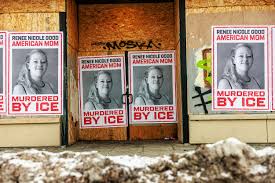
The context in which organised resistance emerged was not abstract. In under a month, three people died during immigration enforcement operations: Reneé Good, 37, mother of three, shot by ICE agent Jonathan Ross on January 8, 2026 in Minneapolis; Keith Porter Jr., 43, father of two daughters, killed by a state agent in Los Angeles on January 1; and Alex Jeffrey Pretti, a 37-year-old intensive care nurse and US citizen, on January 24. Trump and Vice President JD Vance defended the agents, describing the Minneapolis case as "an act of self-defence."
Minnesota Governor Tim Walz called on the public to document immigration operations, after being called "useless" by Trump at a press conference. The president warned: "If I'm forced to act, I'll do it quickly and effectively."
The return of the Black Panthers
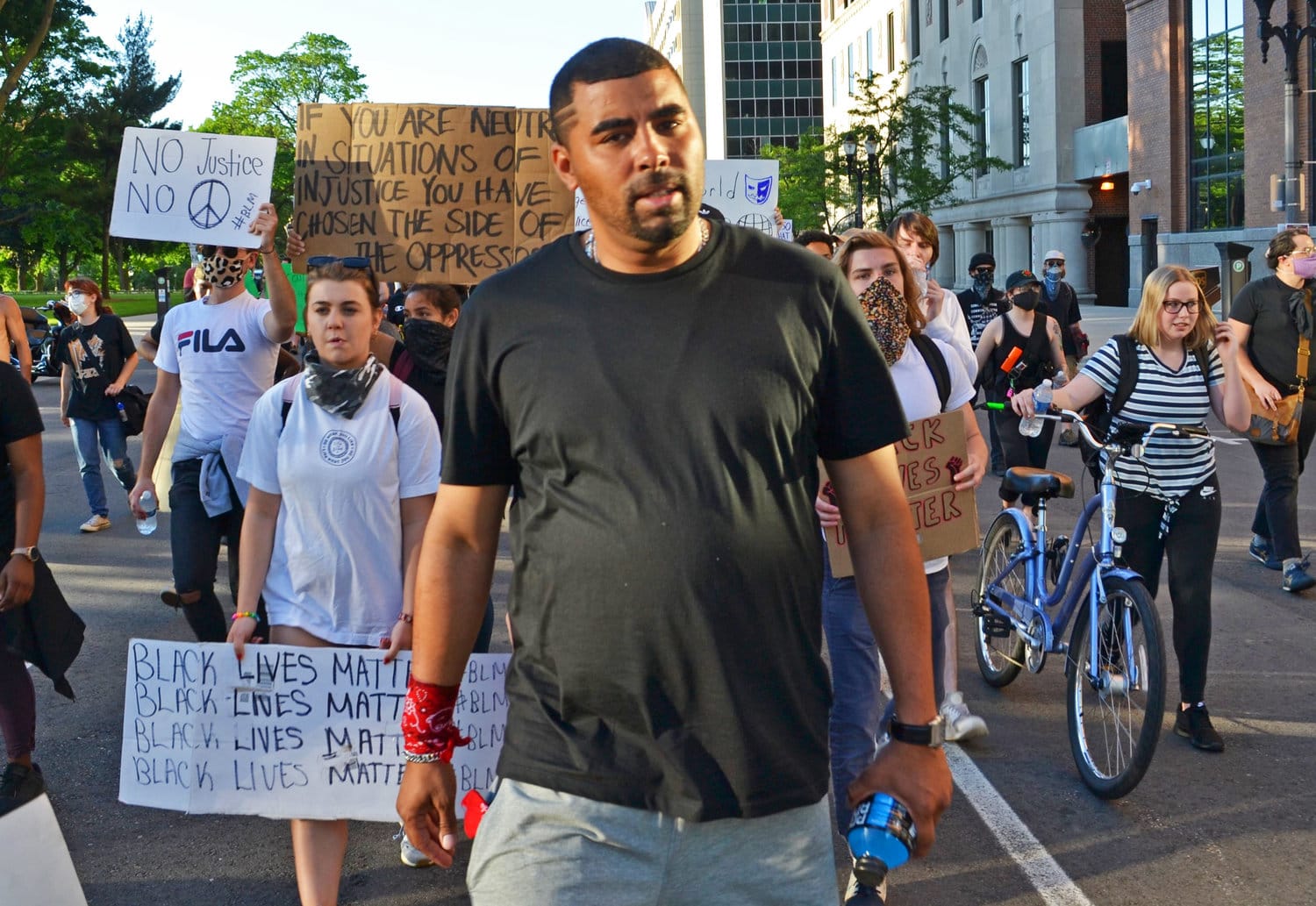
The response that went viral came on January 8, 2026, the same day Reneé Good was killed. Members of the Black Panther Party for Self-Defense appeared at the protest outside Philadelphia City Hall carrying legally permitted military-style weapons and black jackets bearing the panther logo. Paul Birdsong, who identifies himself as chairman of the group, told The Philadelphia Inquirer: "That wouldn't have happened if we had been there. Not a single person would have gotten touched."
During the march, upon spotting a group of ICE agents, the agents retreated to their vehicles and drove away. The group — which Birdsong renamed the Black Lion Party for International Solidarity — has no more than 100 members, was founded in 2024, and conducts armed patrols in North and West Philadelphia. Its stated mission: to protect neighbours from violence, drugs, and, since January, from immigration raids.
The resurgence was not without debate. Myesha Newton, niece of original co-founder Huey P. Newton, publicly condemned the group for using the party's name. Birdsong responded by pointing out that the original Panthers worked alongside Palestinians, Chicanos, and LGBTQ communities.
The original Panthers were founded in October 1966 in Oakland, California, by Bobby Seale and Huey P. Newton, following the assassination of Malcolm X in 1965 and the death of unarmed teenager Matthew Johnson at the hands of the San Francisco police. They combined armed self-defence with community programmes: food kitchens, health clinics, schools. In 1967, then-Governor Ronald Reagan signed the Mulford Act specifically to ban their armed patrols. By 1969 they had more than 5,000 members. They operated until 1982. Decades later, many of their members remain imprisoned, some serving sentences of more than 50 years.
"The most potent weapon in the hands of the oppressor is the mind of the oppressed." — Steve Biko
The numbers of a war that buried another war
On February 28, 2026, the war with Iran began. And with it, immigration policy disappeared from the headlines. But ICE operations did not stop. These are the verified figures:
During the twelve months between January 20, 2025 and January 19, 2026, the Trump administration deported approximately 540,000 people according to a federal data analysis by The New York Times — though the Department of Homeland Security offered figures ranging from 622,000 to 700,000 in different press releases issued within days of one another. The AP, analysing ICE's own data, put the figure at around 400,000.
Approximately 70,000 people are held in ICE custody — an increase of 80% since the start of the administration. The number of detention facilities rose from around 110 to 225, with plans to expand capacity through converted warehouses. At least three deaths have been reported at Camp East Montana, at Fort Bliss, Texas — one of them classified as homicide by the local medical examiner.
Only 26% of people detained by ICE have a criminal conviction. In the New England region, the percentage of people arrested with criminal records fell from 47% in 2024 to 25% in 2025. Arrests of immigrants without criminal records increased by 807% between January and June 2025 compared to the same period in 2024.
Congress, controlled by Republicans, allocated $170 billion to fund the initiative, more than tripling the ICE budget. The Mass Deportation Coalition — which includes the Heritage Foundation and Erik Prince, founder of Blackwater — declared that 2025 was "phase one" and that this year's "phase two" will target workers at their places of employment and people with expired visas.
The destinations: what the evidence shows
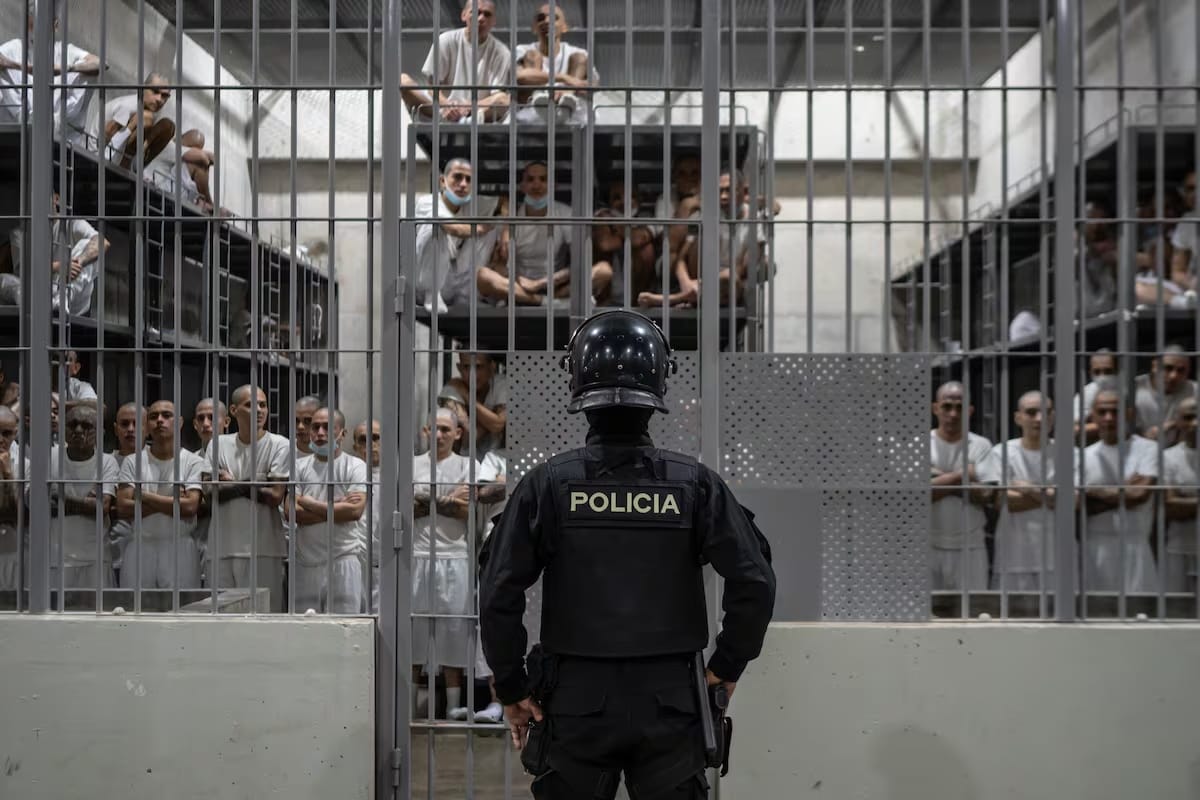
El Salvador — CECOT
The Terrorism Confinement Center (CECOT) is a maximum-security prison in Tecoluca, El Salvador, with capacity for 40,000 inmates — which President Bukele plans to expand to 80,000. Each cell houses an average of 156 people, with metal bunks and no mattresses, two toilets and two washbasins. Inmates are allowed outside for 30 minutes a day. In March 2025, the US sent more than 280 Venezuelans to CECOT in exchange for $6 million paid annually to the Salvadoran government.
An 81-page report by Human Rights Watch and Cristosal documented that investigators found no evidence that any of the deported Venezuelans were members of Tren de Aragua. Almost none had been convicted of any crime. At least 62 had pending asylum cases in the US. According to testimony, they were beaten from the moment they arrived and throughout their detention. Three reported being subjected to sexual violence. The prison director told them upon arrival: "You have arrived in hell. Here you will spend the rest of your lives." The 252 Venezuelans were released in July 2025 in a prisoner exchange. Dozens of deported Salvadorans sent there remain imprisoned.
What is Tren de Aragua?
Tren de Aragua is a Venezuelan criminal organisation born inside the Tocorón prison, in Aragua state, around 2014. It originally controlled the facility with total impunity — the prison had a swimming pool, a nightclub, and even a zoo within its walls — making it a symbol of the institutional collapse of the Venezuelan state under Maduro. As the economic crisis and mass Venezuelan migration took hold from 2017 onward, the group expanded across Latin America and eventually reached US cities including New York, Houston, Denver, and Chicago. It is funded through extortion, human trafficking, forced prostitution, and drug trafficking, and uses extreme brutality — torture, filmed executions — as a tool of control. The Trump administration designated it a foreign terrorist organisation in January 2025 and invoked the Alien Enemies Act of 1798 to deport alleged members without judicial process. The documented problem: in many cases, the only "evidence" of membership was a tattoo or a hand gesture captured in a photograph, with no criminal convictions and no concrete proof of affiliation.
South Sudan
The US State Department itself considers South Sudan too dangerous for almost all American citizens, advises planning for hostage situations, and evacuated all non-essential diplomats. Nevertheless, in July 2025, the US deported eight people there — from Cuba, Laos, Mexico, Myanmar, Vietnam and South Sudan — with less than 16 hours' notice and no opportunity to contest the destination. White House Border Czar Tom Homan himself publicly admitted that he does not know the current whereabouts of those deportees. The country is on the brink of a new civil war.
Eswatini
The US signed an agreement with Eswatini — an absolute monarchy of 1.2 million people in southern Africa — to receive up to 160 deportees in exchange for $5.1 million. The first five sent came from Cuba, Jamaica, Laos, Vietnam and Yemen and were held in the maximum-security Matsapha prison in solitary units. The agreement includes a clause that expressly denies any legal rights or obligations under Eswatini law, US law, or international law. A lawyer hired by the families attempted to visit the detainees: on his first visit he was told they were still "adjusting"; on the second, that he needed permission from the US. A Cuban detainee began a hunger strike after three months without being able to communicate with the outside world. In 2021, Eswatini security forces killed dozens of pro-democracy demonstrators.
What is Eswatini, and what does its human rights record show?
Eswatini — formerly known as Swaziland — is Africa's last absolute monarchy. King Mswati III has ruled since 1986 with total power over all three branches of government. Political parties have been banned since 1973 under the Sedition and Subversive Activities Act; candidates stand as individuals and the king holds veto power over any act of parliament. Freedom House gave the country a score of 17 out of 100 in its 2025 Freedom in the World report, with just 1 out of 40 on political freedoms, classifying it as "not free."
In 2021, mass protests demanded democratic reform. The response was violent repression: security forces killed at least 46 demonstrators, fired live ammunition at civilians, and carried out mass arrests. In January 2023, human rights lawyer Thulani Maseko was shot dead in his home in front of his wife and children, hours after the king publicly warned that "mercenaries" would deal with those calling for reforms. To date, no one has been arrested for the killing. In July 2024, two legislators were sentenced to 85 and 58 years in prison respectively for participating in the 2021 pro-democracy protests.
The US State Department itself documented in its annual reports the existence of extrajudicial killings, torture, life-threatening prison conditions, and structural impunity within the security forces. This is the country to which the United States pays $5.1 million to receive third-country deportees, held in the maximum-security Matsapha prison in solitary units, without access to lawyers, without formal charges, and without a release date — under an agreement that expressly denies any obligation under international law.
Rwanda, Ghana and Uganda
Rwanda agreed to receive up to 250 deportees in exchange for $7.5 million. In Ghana, all deported individuals had previously been granted immigration protection by US immigration judges. Uganda conditioned its agreement on not accepting people with criminal records. The African Commission on Human and Peoples' Rights expressed concern in July 2025 over the agreements with South Sudan and Eswatini. The UN High Commissioner for Human Rights noted that the situation "raises serious concerns regarding a wide array of rights that are fundamental to both US and international law."
As of March 16, 2026, the US had signed or begun negotiations with 58 countries. The mechanism of persuasion: the threat of tariffs, visa bans, and other restrictions for those who refuse.
A model with a history
What the United States is building has a precedent worth naming. Between 1718 and 1776, Britain transported approximately 60,000 convicted criminals to its colonies in North America — a practice that ended abruptly when those colonies declared independence and stopped accepting British prisoners. With prisons overflowing, the Crown sought new destinations: it first attempted West Africa, without success. Finally, in 1788, the First Fleet sailed for Botany Bay. Between 1788 and 1868, Britain transported approximately 162,000 convicts to Australia — most of them sentenced for minor offences such as petty theft. The logic was simple: clean the metropolitan territory by sending the problem to distant lands, in the charge of governments that accepted the burden in exchange for resources and imperial recognition.
Times change, but practices persist. The logic of governments is not to improve legal frameworks but to fund their circumvention: paying third countries to do what their own courts prohibit them from doing at home. Impunity by export. Meanwhile, wars are being fought and the deported keep travelling.
Sources
CECOT — El Salvador
- Human Rights Watch — conditions in CECOT (judicial declaration): https://www.hrw.org/news/2025/03/20/human-rights-watch-declaration-prison-conditions-el-salvador-jgg-v-trump-case
- Human Rights Watch / Cristosal — full report on tortured Venezuelans: https://www.hrw.org/report/2025/11/12/you-have-arrived-in-hell/torture-and-other-abuses-against-venezuelans-in-el
- Human Rights Watch — World Report 2026, El Salvador chapter: https://www.hrw.org/world-report/2026/country-chapters/el-salvador
- Britannica — CECOT fact sheet: https://www.britannica.com/topic/Terrorism-Confinement-Center
- NILC — tracking CECOT deportations: https://www.nilc.org/resources/tracking-the-cecot-disappearances/
South Sudan
- International Refugee Assistance Project — deportations to South Sudan: https://refugeerights.org/news-resources/trump-administrations-third-country-removals-put-migrants-in-harms-way
- Berkeley Political Review — analysis of the third-country deportation spiral: https://bpr.studentorg.berkeley.edu/2025/11/18/the-dystopian-spiral-of-third-country-deportations/
Eswatini
- Al Jazeera — first deportation flight to Eswatini: https://www.aljazeera.com/news/2025/7/16/us-deports-immigrants-to-african-country-of-eswatini-amid-rights-concerns
- Al Jazeera — second flight to Eswatini: https://www.aljazeera.com/news/2025/10/6/us-sends-another-third-country-deportation-flight-to-eswatini
- JURIST — new deportees arrive in Eswatini, March 2026: https://www.jurist.org/news/2026/03/eswatini-receives-additional-deportees-from-us-amid-human-rights-concerns/
- New Lines Magazine — detention conditions and the US-Eswatini agreement: https://newlinesmag.com/reportage/the-toll-of-trumps-african-deportation-agreements/
- Human Rights Watch, World Report 2026 — Eswatini: https://www.hrw.org/world-report/2026/country-chapters/eswatini
- Human Rights Watch, World Report 2024 — Eswatini: https://www.hrw.org/world-report/2024/country-chapters/eswatini
- International Commission of Jurists — Eswatini Supreme Court ruling, August 2024: https://www.icj.org/eswatini-supreme-court-decision-upholding-repressive-security-laws-is-a-blow-to-human-rights/
- Human Rights Watch, World Report 2025 — Eswatini: https://www.hrw.org/world-report/2025/country-chapters/eswatini
- US Department of State — 2024 Human Rights Report, Eswatini: https://www.state.gov/reports/2024-country-reports-on-human-rights-practices/eswatini
- Human Rights Watch — deportation agreements with African countries: https://www.hrw.org/news/2025/09/23/us/africa-expulsion-deals-flout-rights
Rwanda, Ghana and Uganda
- Human Rights Watch — agreements with African countries: https://www.hrw.org/news/2025/09/23/us/africa-expulsion-deals-flout-rights
- Democracy Now — agreement with Rwanda: https://www.democracynow.org/2025/8/6/headlines/rwanda_agrees_to_receive_third_country_immigrants_deported_from_the_us
Third-country deportation general tracker
- US Committee for Refugees and Immigrants — country-by-country tracker: https://refugees.org/tcdtracker/
First Circuit ruling — March 16, 2026
- DHS — official US government press release: https://www.dhs.gov/news/2025/06/23/dhs-releases-statement-major-victory-trump-administration-and-american-people
- CNN — third-country deportation policy ruled illegal by Judge Murphy: https://www.cnn.com/2026/02/25/politics/trump-administration-third-country-deportation
- NBC News — Murphy ruling on due process: https://www.nbcnews.com/news/us-news/federal-judge-murphy-trump-third-country-deportations-unlawful-rcna260684
- Just The News — First Circuit ruling, March 16: https://justthenews.com/government/courts-law/appeals-court-rules-trump-admin-can-continue-quickly-deporting-illegal
- American Immigration Council — legal framework explained: https://www.americanimmigrationcouncil.org/fact-sheet/what-are-third-country-removals-factsheet/