
A Night of Ashes: The Silenced Horror of Yeletawa and Nigeria's Unfinished War With Itself
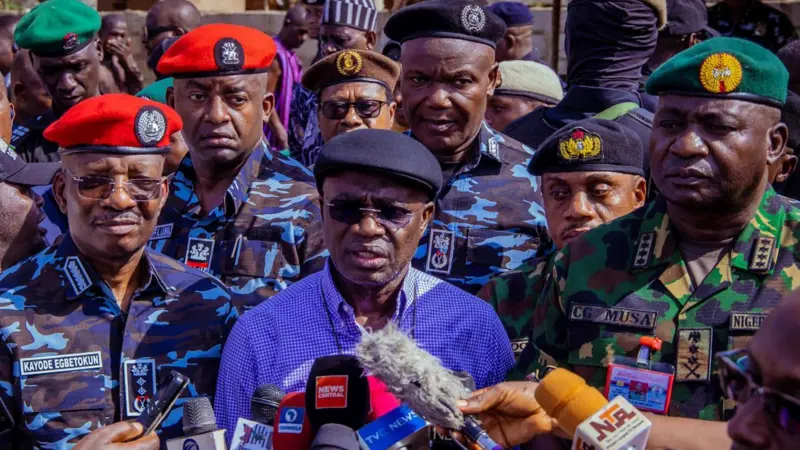
On the night of June 19, 2025, more than 200 people were massacred in Yeletawa, Benue State. The government declared no emergency, sent no official representative, issued no national mourning. There was only silence. This article investigates not just the killings but the long shadow of complicity, strategic neglect, and ethnic politics fueling Nigeria's worsening insecurity.
Originally published: July 22, 2025 | Updated: March 12, 2026 By Ebenezer Dadzie | Politics | Estimated reading time: 10 minutes
Prologue: a country on fire
It's a bitter truth many Nigerians have come to accept: peace is no longer a promise — it's a privilege. For millions of citizens, safety is fleeting. Even those in uniform — the military personnel tasked with defending the nation — are no longer spared. The cycle of violence has become relentless, with blood spilling freely across states, as if the nation itself is bleeding out. But the question haunting us isn't just why this keeps happening. It's who allows it, and why nothing changes.
How it began: a manufactured chaos
Many trace today's unrest back to the politically charged years between 2011 and 2015. During this time, allegations circulated that Boko Haram's rise was no coincidence — that it was a political weapon deployed to weaken then-President Goodluck Jonathan's administration. Jonathan eventually lost the 2015 election to Muhammadu Buhari, becoming the first sitting Nigerian president to concede defeat peacefully. His exit ushered in Buhari, and with that, the country's peace began to unravel in other ways.
What began as Boko Haram evolved into something far more complex — bandits, Fulani herdsmen, and insurgents that are in practice indistinguishable from one another, and equally brutal. Many believe these groups are not only shielded by figures in power but were trained by those meant to defend the people. Then came the government's most insulting response: the so-called "repentant Boko Haram" program — a policy that forgives killers, gives them jobs, and funds their reintegration, while victims lie in shallow, unmarked graves.
Who was Goodluck Jonathan?
In January 2012, President Goodluck Jonathan — a Christian of Ijaw ethnicity — publicly declared that Boko Haram had infiltrated the highest levels of politics and the military, describing the group as a tool of northern politicians to destabilize his southern government. Nigeria, since its democratic transition, operates under a tacit rotation agreement for executive power between the predominantly Muslim north and the predominantly Christian south. 1 2 3 4
The night that must not be forgotten
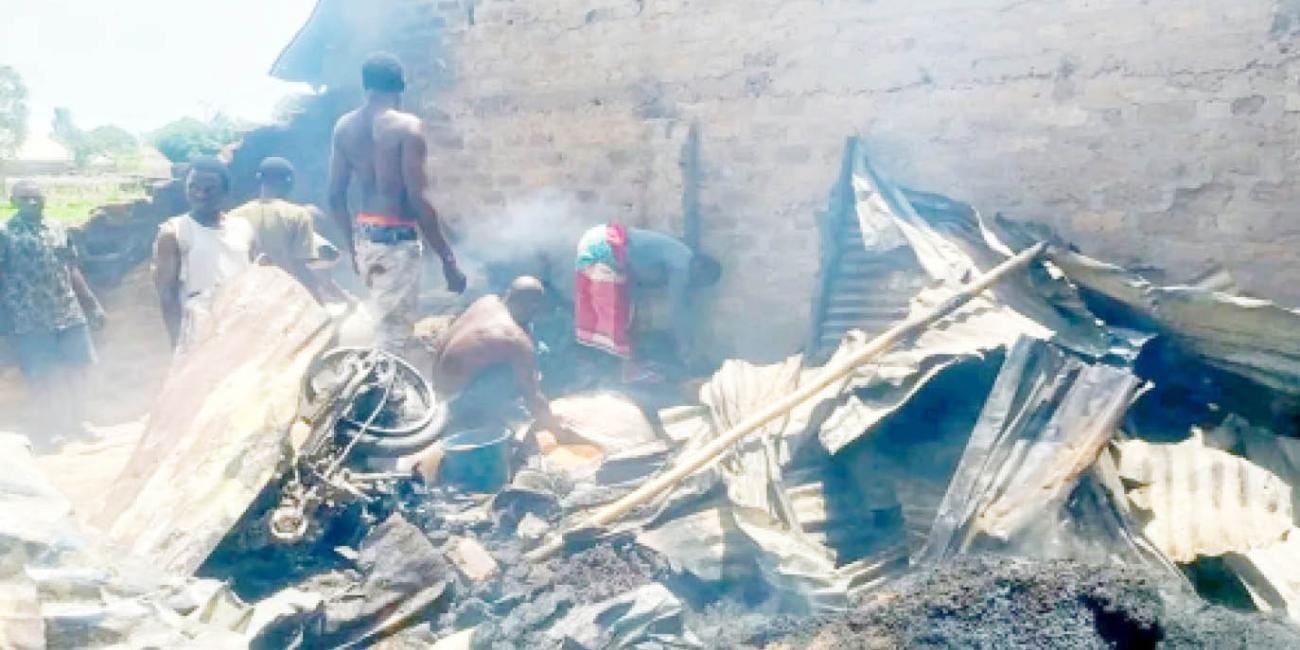
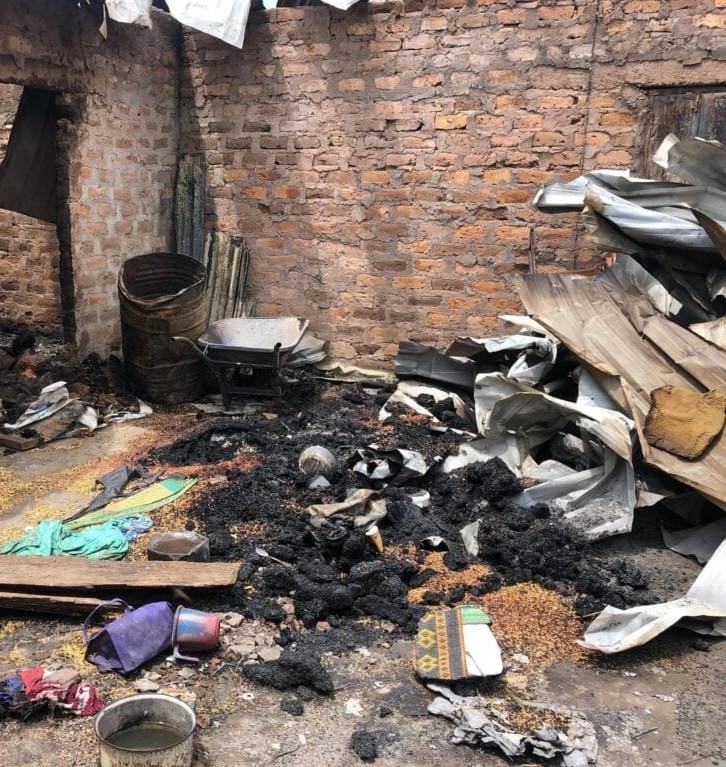
On the night of June 13–14, 2025, in Yeletawa — a quiet farming community in Benue State's Guma Local Government Area — horror took a grotesque form. Survivors recall waking to flames, gunfire, and the shattering screams of neighbors. Churches, huts, and makeshift shelters housing displaced families were set ablaze. The attackers — armed with AK-47s, machetes, and explosives — surrounded the community and cut off every path to escape.
"They were just farmers," said one eyewitness. "Not criminals. Just people trying to survive." Those who ran were shot down. Others were burned alive in their sleep. By morning, the air reeked of charred flesh. Survivors emerged from hiding, trembling, in mourning, broken. Initial local reports estimated 100 deaths. Later counts by humanitarian groups — including the Diocese of Makurdi Foundation for Justice, Development and Peace — confirmed more than 200 people killed, many of them children, entire families wiped out in minutes 5.
The deafening silence of the state
What followed was perhaps more chilling than the massacre itself: silence. No state of emergency. No presidential visit. No official mourning. No justice. Just the indifferent hum of politics as usual.
And yet, the questions persist. How do cattle herders access high-powered rifles, drones, and explosives? Why were no security reinforcements dispatched during an attack that lasted for hours? Why do similar massacres in southern regions trigger immediate state responses, while Benue is ignored? 6
The answer may lie in a painful truth: there is selective protection. Some regions, some ethnicities, some lives — appear more disposable than others.
When the government watches in silence, a phrase attributed to the late General Sani Abacha takes on a disturbing relevance: "If an insurgency lasts more than 24 hours, the government has a hand in it" 7. Whatever its origins, the words function today as a diagnosis. In Yeletawa, villagers called for help. They screamed into the dark, hoping for rescue. But help never came — at least not until the attackers had vanished and the dead were cold. Is this incompetence, or something worse? Many believe it is strategic neglect: that somewhere in the corridors of power, decisions were made about whose lives are worth saving.
The hidden war beneath the headlines
The Yeletawa massacre is not an isolated incident. Villages across Guma, Logo, and Agatu have been flattened, turned into mass graves. The perpetrators remain unseen but known. The victims cry for justice, but no one listens. One man, who lost 20 family members in the June attack, told us: "We have a government, but they don't care about us. As long as it doesn't touch their families, they move on." His pain is echoed by many who remember a time when Fulani herders and Benue farmers coexisted peacefully 8. The betrayal, they say, is personal and irreversible.
Guma, Logo, and Agatu: a cycle that did not begin in 2025
The data confirms this did not start in June 2025. Amnesty International documented that by the end of 2024, 500,182 people had already fled to IDP camps in Benue State — a figure that grew by more than 10,000 additional people in the early months of 2025 following attacks in Guma, Logo, Agatu, and surrounding areas 9. An analysis by Ripples Nigeria tracking violence between 2009 and 2025 shows that by 2016, significant clusters of killings were already concentrated in those three areas, expanding geographically in subsequent years to cover nearly the entire state 9. These are not communities that fell once: they are communities subjected to a deliberate, repeated cycle of attack, displacement, and destruction of farmland — with not a single judicial conviction.
Porous borders and trails of bullets
Nigeria's porous borders with Niger, Chad, Cameroon, and Benin have only worsened the crisis. Armed groups move freely. Weapons flow in unchecked. And the government? It appears more interested in arresting peaceful protesters than confronting insurgents. How does a herder — traditionally armed with a stick — come to wield a $1,000 AK-47? Who's paying for it? Who's training them? Who is protecting them? These are not conspiracy theories. They are questions Nigeria can no longer afford to ignore 10.
Cuando una nación ve a 200 de sus ciudadanos masacrados en una noche y no responde, algo mayor que vidas se ha perdido. When a nation watches 200 of its citizens slaughtered in one night and offers no response, something greater than lives has been lost: the conscience of the state. The Yeletawa massacre is not just about Benue — it is about who we have become as a country. The worst part? No one in power seems to care. This is how a nation dies — not with one grand tragedy, but with a thousand ignored ones.
When the enemy wears our uniform: betrayal inside the Nigerian Army
According to an insider interview, two senior military officers — both brigadier generals — were allegedly responsible for a decade-long wave of killings in Maiduguri, Borno State. The scars of that bloodshed remain today. The city has not recovered. The air still carries the silence of people who've lost everything.
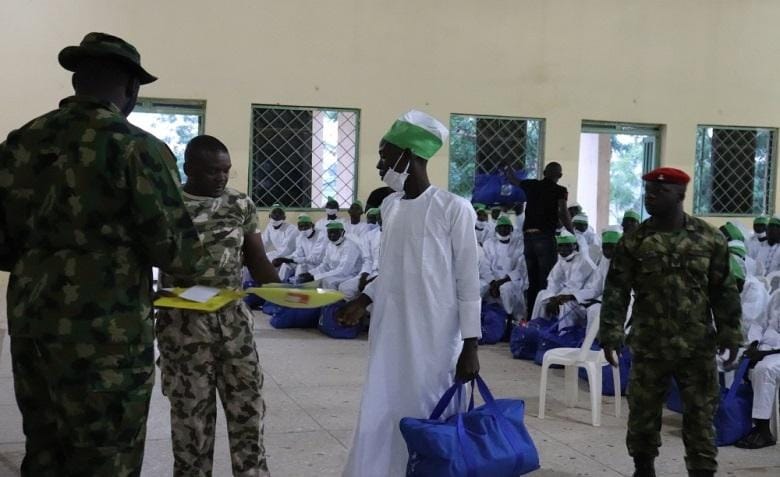
"Billions have been poured into military operations in the North," the source explained. "Yet nothing has changed. If anything, it's gotten worse." In one deeply troubling account, a soldier described how an entire unit was set up during a recent mission — deployed alongside "repentant" Boko Haram members who had supposedly been rehabilitated.
"We were on a mission," he said. "The driver — a sergeant — stopped by the roadside. That's when it happened. One of the so-called repentant Boko Haram members silently walked up to him and shot him in the head." There was no arrest. No consequences. The killer simply walked free. "Instead of outrage, we heard whispers blaming the dead sergeant for his own death," the soldier added bitterly. "Can you imagine?"
This is not just a story of violence. It is a story of betrayal from within.
Many frontline soldiers now believe that the very people they are sent to fight are embedded in their own ranks. These "repentant terrorists" are not only roaming free — some have allegedly been absorbed into the Nigerian Army. Others have become civilian vigilantes. Many are still spreading terror across the Middle Belt and Northeast: Benue, Taraba, Kaduna, and Borno 11.
"Joining the army now feels like signing your own death certificate," another source said. "Young soldiers are dying for a cause they will never win, because the war is controlled by those who benefit from the chaos."
To understand why young people keep joining these groups, the numbers demand attention. Nigeria ranks 172nd out of 183 countries in the 2023 Global Youth Development Index — second to last for youth employment and opportunity, third to last for equality and inclusion 12. The official youth unemployment rate of 6.5% in 2024 was disputed by labor unions and researchers: under the previous methodology, that figure stood at 53.4% for people aged 15 to 24 in 2020 12. On top of that, more than 18 million children are out of school — one of the highest figures in the world, concentrated in the country's north 13. In that void, armed groups don't just recruit through violence: they offer a salary, belonging, and identity. Boko Haram and ISWAP know this, and they use it 12.
The government's "repentant Boko Haram" program — Operation Safe Corridor, active since 2016 — had processed more than 2,000 ex-combatants by 2025 14. But active-duty soldiers documented that those same "repentants" were systematically leaking military movements and weapons positions to their former commanders before each attack 14. In 2024, 13 members of the program escaped on motorcycles with sophisticated weapons provided by the Borno State Government 14. In December 2024, Amnesty International filed a complaint with the International Criminal Court requesting an end to the ICC Prosecutor's unexplained delay in opening a formal investigation into war crimes and crimes against humanity in Nigeria 15. The Nigerian Army's response was to describe Amnesty's sources as "intrinsically unreliable."
The system is broken. Profoundly broken. There are calls for serious internal investigations within the Nigerian military, but many fear the rot runs too deep — that some of those expected to investigate are themselves complicit. For justice to mean anything, those found guilty of protecting terrorists within the armed forces must face the full weight of the law. Because in this country, the greatest betrayal doesn't always come from the enemy. Sometimes it comes from the one standing beside you in uniform.
Final thought
Benue has become a warzone. But it is not the only one. Until justice becomes more than a slogan — until lives matter more than political ambitions — the graves will keep multiplying. And someday, it won't just be Yeletawa we mourn, but Nigeria itself.
Sources
- Walker, Andrew. What Is Boko Haram? United States Institute of Peace, Special Report 308, June 2012. Jonathan's statement documented on p. 6. https://www.usip.org/sites/default/files/SR308.pdf ↩
- Walker, Andrew. What Is Boko Haram? United States Institute of Peace, Special Report 308, June 2012. Analysis of institutional weakness as the primary factor explaining Boko Haram's growth, pp. 2–4. https://www.usip.org/sites/default/files/SR308.pdf ↩
- Encyclopædia Britannica. Goodluck Jonathan — Biography & Facts. https://www.britannica.com/biography/Goodluck-Jonathan ↩
- Nairametrics. How the Nigerian Economy has performed under each President. https://nairametrics.com/2022/07/01/how-nigerian-economy-has-performed-under-each-president-from-1999/ | BusinessDay Nigeria. The Economics of President Goodluck Jonathan's Administration. https://businessday.ng/exclusives/article/the-economics-of-president-goodluck-jonathans-administration/ ↩
- Aid to the Church in Need (ACN International). Nigeria: Up to 200 dead in worst killing spree. June 16, 2025. Documents the count of 200 deaths carried out by staff of the Diocese of Makurdi Foundation for Justice, Development and Peace, who visited the site in the hours following the attack. https://acninternational.org/nigeria-up-to-200-dead-in-worst-killing-spree/ ↩
- Al Jazeera. Benue killings: How massacres continue amid silence. February 15, 2023. https://www.aljazeera.com/news/2023/2/15/nigeria-benue-killings ↩
- The quote has circulated in Nigeria since Abacha's daughter Gumsu posted it in 2014, attributing it to her father. There is no record of when or in what context Abacha originally made the statement, and Nigerian outlets including Daily Trust describe it as "famous but unverified." TheCable Nigeria. Abacha's daughter links terror to government. May 8, 2014. https://www.thecable.ng/abachas-daughter-links-insurgency-to-government/ / Daily Trust. Remembering General Sani Abacha. June 8, 2021. https://dailytrust.com/remembering-general-sani-abacha/ ↩
- Human Rights Watch. Nigeria: Worsening farmer-herder conflict. May 12, 2020. https://www.hrw.org/news/2020/05/12/nigeria-worsening-farmer-herder-conflict / International Crisis Group. Stopping Nigeria's spiralling farmer-herder violence (Africa Report No. 262). 2018. https://www.crisisgroup.org/africa/west-africa/nigeria/262-stopping-nigerias-spiralling-farmer-herder-violence ↩
- Amnesty International. Nigeria: Violence and widespread displacement leave Benue facing a humanitarian disaster. July 16, 2025. Documents systematic attacks in Guma, Logo, and Agatu with on-site visits; confirms 500,182 people in IDP camps by end of 2024 and more than 10,000 additional displacements in early 2025. https://www.amnesty.org/en/latest/news/2025/07/nigeria-violence-and-widespread-displacement-leave-benue-facing-a-humanitarian-disaster/ / Ripples Nigeria. Benue's Descent: Sixteen years of escalating violence. September 24, 2025. Data analysis 2009–2025 identifying Guma, Logo, and Agatu as historical epicenters of attacks since at least 2016. https://www.ripplesnigeria.com/ripplesmetrics-benues-descent-sixteen-years-of-escalating-violence/ ↩ ↩2
- Amnesty International. Harvest of death: Three years of bloody clashes between farmers and herders. 2018. https://www.amnesty.org/en/documents/afr44/9500/2018/en/ / BBC News Africa. Why is Nigeria's Middle Belt under attack? June 30, 2021. https://www.bbc.com/news/world-africa-57649647 ↩
- Global Centre for the Responsibility to Protect. Populations at risk: Nigeria – Ethnic violence in Benue and Kaduna States. 2023. https://www.globalr2p.org/countries/nigeria/ ↩
- Afrobarometer. Young Nigerians want government action on jobs and cost of living. Dispatch No. 998, June 16, 2025. Documents Nigeria's ranking of 172nd in the 2023 Global Youth Development Index and the methodological controversy over youth unemployment figures: the official rate of 6.5% in 2024 contrasts with the 53.4% recorded in 2020 under the previous methodology. https://www.afrobarometer.org/wp-content/uploads/2025/06/AD998-Nigerian-youth-want-government-action-on-jobs-and-cost-of-living-Afrobarometer-16june25.pdf ↩ ↩2 ↩3
- The Government and Business Journal / Save the Children. Nigeria has one of the highest numbers of children out of school in the world, with over 18 million missing education. December 28, 2024. https://govbusinessjournal.com/2024-in-review-nigeria-has-one-of-the-highest-numbers-of-children-out-of-school-in-the-world-with-over-18-million-missing-education/ / Wiley — Review of Education. Assessing the phenomenon of out-of-school children in Nigeria. 2024. Documents the concentration of the problem in the country's north, with a 15% gap in primary school enrollment between northern and southern regions. https://bera-journals.onlinelibrary.wiley.com/doi/full/10.1002/rev3.70011 ↩
- The Conversation. Nigeria's Boko Haram rehabilitation efforts ignore the emotional trauma of soldiers. October 14, 2025. Documents that Operation Safe Corridor processed more than 2,000 ex-combatants by 2025 and analyzes the systematic distrust of active-duty soldiers toward the reintegration program. https://theconversation.com/nigerias-boko-haram-rehabilitation-efforts-ignore-the-emotional-trauma-of-soldiers-why-this-matters-267023 / Brookings Institution. In Nigeria, we don't want them back. Analysis of structural failures in the program, including opaque risk-classification criteria and serious reintegration problems. https://www.brookings.edu/articles/in-nigeria-we-dont-want-them-back/ ↩ ↩2 ↩3
- Amnesty International. Nigeria: Girl survivors of Boko Haram still being failed by government inaction. June 24, 2025. Documents the complaint filed with the ICC on December 2, 2024 requesting an end to the Prosecutor's unexplained delay in opening a formal war crimes investigation in Nigeria. https://www.amnesty.org/en/latest/news/2025/06/nigeria-girl-survivors-of-boko-haram-still-being-failed-by-government-inaction-new-testimony/ ↩